When I left for this trip, I didn’t think I was going to make it out West, but thanks to Discover and the brand new balance transfer credit card they gave me, I made it happen. I’ll have to write them a glowing customer service review when I get back.
I didn’t get settled at my hostel in Perth until about 11:30 at night, so the city would have to wait.
I still wasn’t quite 100% over the pesky parasite, but the next day I headed out to explore Perth a little bit. There are only about 2.5 million people living in Western Australia and 2 million of them live in Perth. Everything out West is either separated by miles and miles of desert or miles and miles of rainforest.
The West Coast takes Australia’s already laid back attitude and lays it back even further.
I walked about 30 minutes from East Perth to Elizabeth Quay in the central business district (CBD). I walked along the Swan River for a while until I got to Langley Park and then wound my way back through the city to my hostel. As Matt said to me during a conversation, “baby steps away from the toilet.” Hahaha.


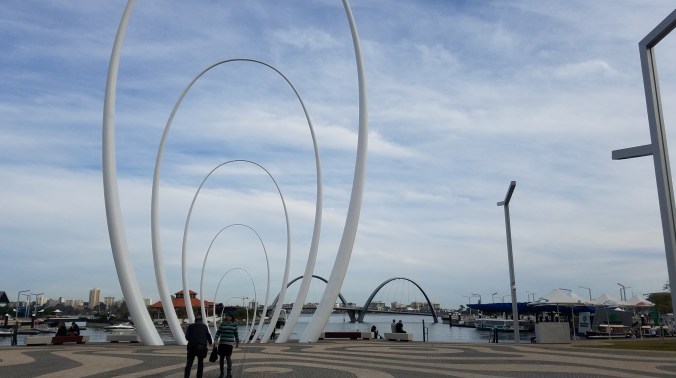
Elizabeth Quay
The next day I walked back to Elizabeth Quay and then continued another 30 minutes along the river to Kings Park and Botanic Gardens. I walked up the hillside to the visitor centre, carpark and entrance to the gardens. On top of the hill is the War Memorial and a great view overlooking the river and Elizabeth Quay.


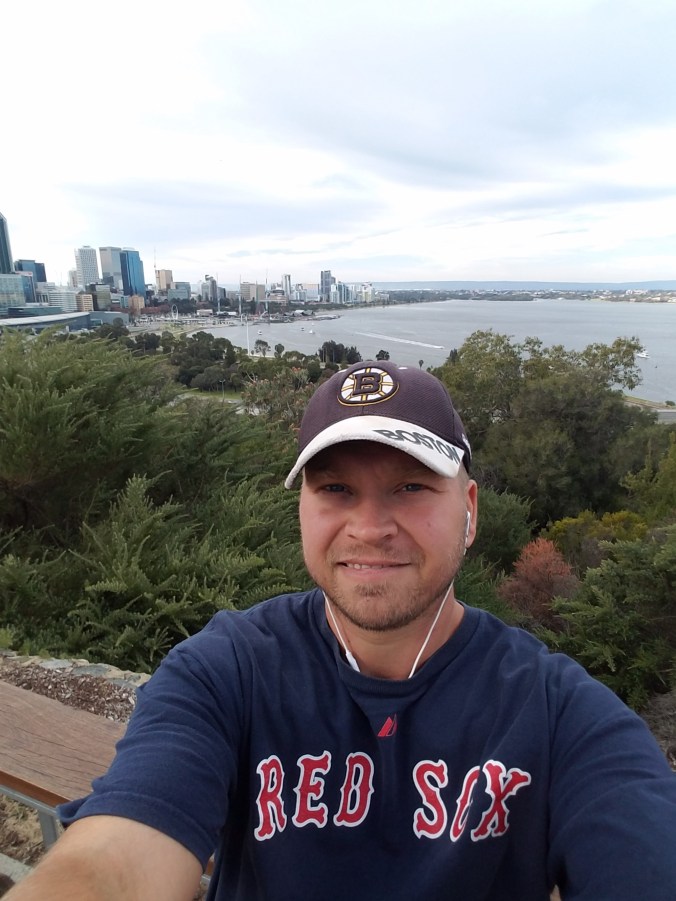
I spent a couple hours walking around the gardens and saw some interesting new plants as well as Mt. Eliza Lookout, the Western Australia Firefighter’s Memorial and DNA Tower.
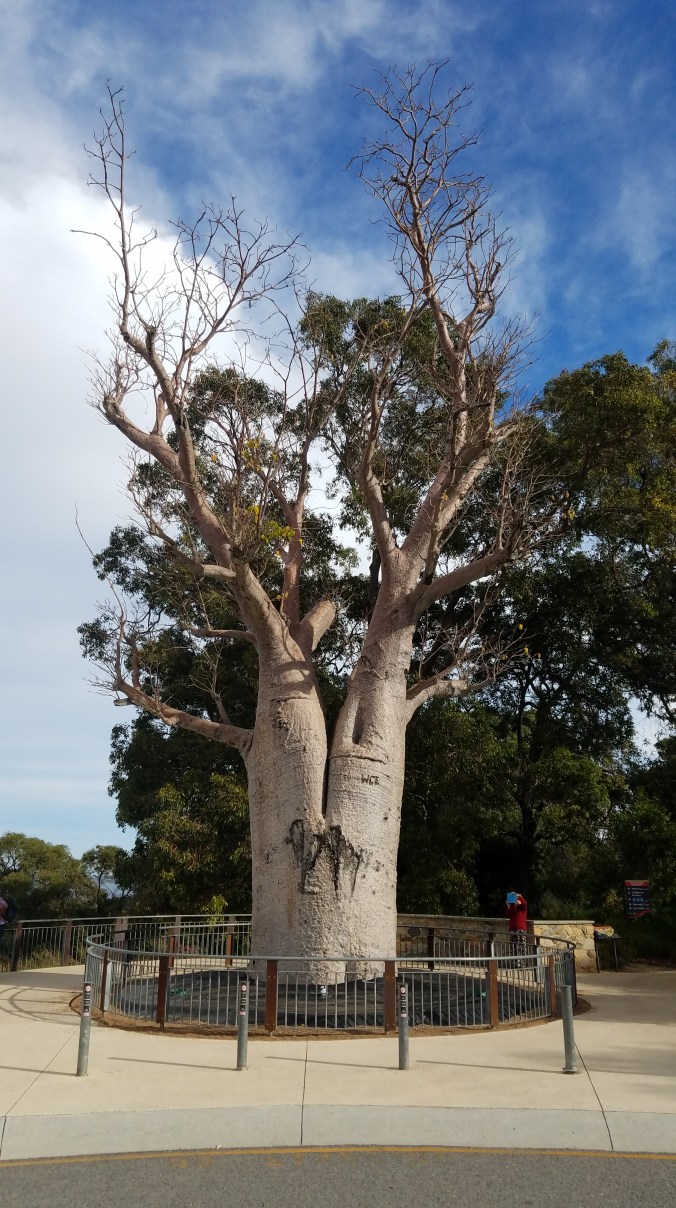
A Boab Tree.


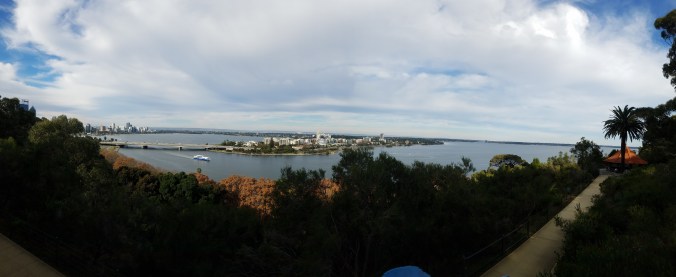
View from Mt. Eliza Lookout


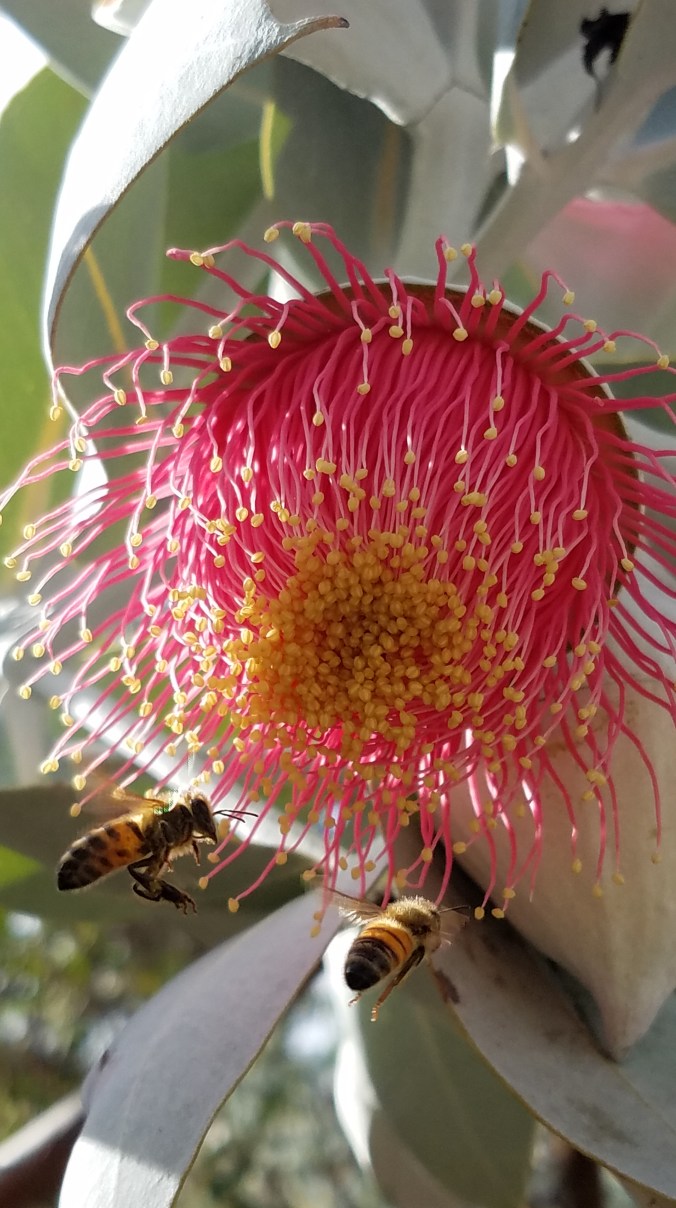
Eucalyptus Macrocarpa
I love the last picture. It almost makes me look like I know what I’m doing with a camera. The Eucalyptus Macrocarpa is my favorite eucalyptus tree that I’ve seen. It grows in the mid-North part of Western Australia, has the largest flower of any eucalyptus and is in bloom most of the year.
Eventually, I started walking back to the hostel. It was Sunday, so there were a couple cricket games going on in Wellington Park near where I was staying. I stopped and watched for a little bit before hitting the hostel for the rest of the night.


The following day I took the scenic ferry down the Swan River to Fremantle. I got to the wharf early, so I went and checked out the Bell Tower.
The Swan Bells are a set of 18 bells that hang in the Bell Tower. Twelve of the set are historic bells from St Martin-in-the-Fields Church in Trafalgar Square in London, which services Buckingham Palace.
The St Martin-in-the-Fields bells were cast in 1725-1726 and rang so loud that they shook the church tower eventually leading to structural damage. They were set to be broken down and recast into a lighter ring until it was decided that they would be gifted to Perth instead for Australia’s Bicentennial in 1988. They are rare in that they are one of the few sets of royal bells, and more so since they are the only set that has ever left England. The bells were also rung as explorer James Cook set sail on the voyage that founded Australia.
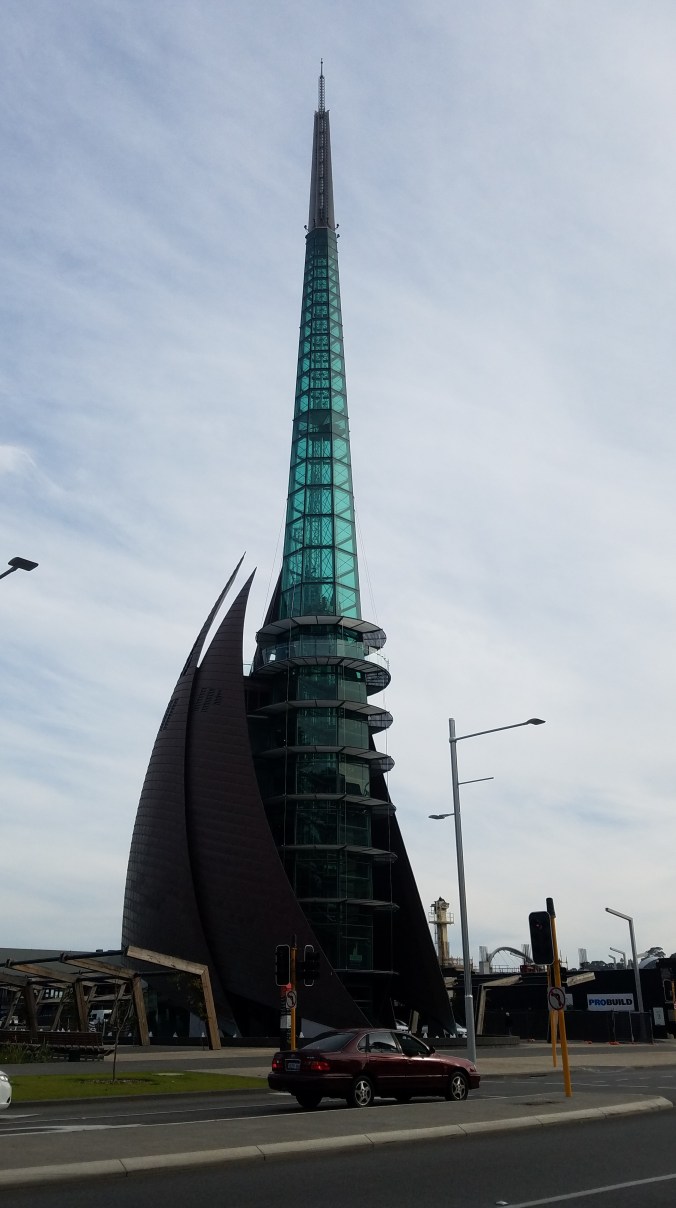
Bell Tower.


I tried to ring the bells, but there were 2 school groups there, so they were fully booked until after I had to board the ferry. Oh well, I’m sure I’ll have so many chances to ring royal bells. I did ring a bell at a church in Coober Pedy. Definitely wasn’t supposed to though and it definitely wasn’t a royal bell.
The views from the tower observation deck were pretty good.


The ferry trip lasted about an hour and a half and then I walked 20 minutes to the Old Firestation Backpackers. Each night before bed at the firestation, I would go up to the balcony, stare at the moon and stars and sing “Somewhere Out There” and wonder if James was in Maynard doing the same thing. I sent in a video to audition for the voice over role of Fievel in the upcoming Disney film An American Tale: Fievel Goes Down Under and the Disney crossover film The Rescuers Down Under: Operation “Crikey! Fievel’s in Trouble.” The first one could be a crossover film too, but that’d be a genre crossover and Disney would have to get into the cartoon porn business. Though I suppose with all the hidden sexually suggestive stuff in their films already, it wouldn’t be a huge leap to make.
Once I settled in, I wandered around Fremantle (“Freo”) for a while before heading back to the hostel to rest up for my early morning trip to Rottnest Island. That day trip is getting it’s own post, because it’s the entire reason I flew to the West Coast in the first place.
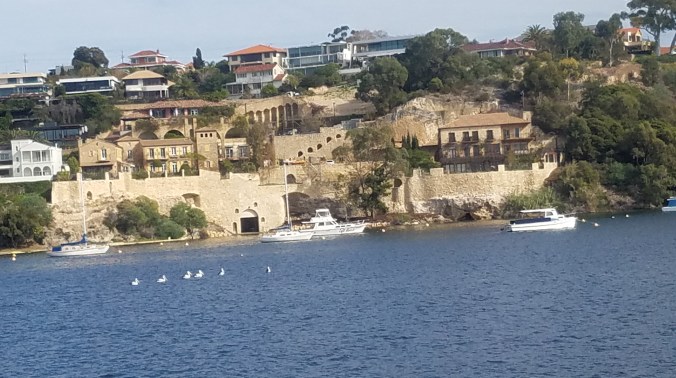
That’s a house on the bank of the Swan River. His neighbor’s house, at one point not that long ago, was the most expensive, residential property ever purchased in Australia.


The day after Rottnest Island, I toured the Fremantle Prison.
“Fremantle Prison was built as a convict barracks in the 19th century and remained in continual use until 1991. The Prison was a place of hangings, floggings, dramatic convict escapes and prisoner riots. Inmates included imperial convicts, colonial prisoners, enemy aliens, prisoners of war and maximum-security detainees.
The first convict transport sailed into Fremantle Harbour in 1850. The Convict Establishment, as the prison was first known, was built by convict labour between 1852 and 1859 using limestone quarried on the site. The first prisoners moved into the main cell block in 1855.
The Establishment was renamed Fremantle Prison in 1867. Transportation ceased the following year when the Hougoumont carried the last convicts to Fremantle. Nearly 10,000 convicts passed through the ‘establishment’ between 1850 and 1868.
At first only imperial convicts were confined at Fremantle Prison. By 1886 less than 60 convicts remained inside a prison built to hold 1,000 men. Perth Gaol (jail) closed and Fremantle Prison became the colony’s primary place of confinement for men, women and juveniles. With the population boom of the 1890s gold rush, Fremantle Prison became busy once again.
More space had to be found for a burgeoning prison population. After the Rottnest Island Aboriginal Prison closed in 1903, prisoners from Fremantle Prison were sent to the island to carry out public works. New Division was built and opened in 1907. During the Second World War, the Australian Defence Department sequestered part of the prison as a military detention centre. A large number of Italian Australians, identified as ‘enemy aliens’ were incarcerated at Fremantle during the war.
Following a series of prisoner riots and growing concerns with prison conditions, a royal commission in 1983 recommended the prison’s closure. Female prisoners had already been transferred to a new facility at Bandyup Women’s Prison in 1970. Fremantle was decommissioned on 8 November 1991 and its prisoners transferred to Casuarina Prison, replacing Fremantle Prison as the state’s main maximum-security prison.
After its closure the WA state government embarked on a long-term conservation plan to ensure the Prison’s preservation for future generations. Fremantle Prison is one of the largest surviving convict prisons in the world today.”- A Brief History from the Fremantle Prison website.
I took the Doing Time tour and the Great Escapes tour. The former focused on the history of the prison, while the latter was mostly about escape attempts in the prison’s history, including the only entirely successful one. The story of the Catalpa escape is kinda long, but it’s about 7 guys from the Irish Republic Brotherhood that escaped and sailed to New Bedford before settling in Boston, so I’m posting it. They are also the only people to escape Fremantle Prison and never be recaptured.
“Perhaps the most famous escape from Fremantle Prison was that of six Irish convicts in 1876. The Fenian movement or Irish Republican Brotherhood was a secret political society engaged in resistance against British rule in Ireland in the 1860’s. A number of Fenians who had infiltrated the British military services were discovered, arrested and sentenced to transportation to Australia.

Charles S Raleigh
1830-1925
Bark Catalpa 1876
oil on canvas
Courtesy New Bedford Whaling Museum, New Bedford, Massachusetts, USA
In 1868 the convict ship Hougoumont arrived at Fremantle carrying 279 convicts, including 62 Fenians. This was the last convict transport to arrive in Australia. The following year one of the Fenian prisoners, John Boyle O’Reilly, was sent to a convict depot in Bunbury. O’Reilly befriended a local Catholic priest who helped him escape aboard an American whaling vessel. O’Reilly sailed to America and settled in Boston, eventually becoming the editor of the Boston Pilot. Yet he never forgot the other Fenian prisoners back in Fremantle.
Two rounds of pardons in 1869 and 1871 saw most of the Fenians released. The American Brotherhood, including O’Reilly and another Irishman John Devoy, plotted to rescue the 6 remaining prisoners.
The Catalpa ship was purchased and in April 1875, disguised as a whaler, it left Massachusetts for Western Australia. Captained by George Anthony and crewed by 22 sailors, most of whom did not know their true mission, the Catalpa took 11 months to reach Australia.
Meanwhile two undercover Fenian agents John Breslin and Tom Desmond arrived in Fremantle in September 1875. Breslin masquerading as a wealthy American businessman, and Desmond as a wheelwright.
The Catalpa reached Bunbury in March 1876. Anthony and Breslin met to finalise the rescue. Coded messages were sent to the prisoners in the Convict Establishment and on Easter Monday the rescue plan was put into action.
Desmond cut the telegraph lines between Fremantle and Perth to hamper communications. The six Fenian prisoners left the prison in their morning work parties. Most of the convict garrison was out watching the Perth Regatta on the river and security was at a minimum. The six prisoners slipped away from their work parties and were met by Breslin and Desmond with two horse drawn carriages. A nervous two hours followed as the carriages raced south to Rockingham where a long boat waited to take them out to the Catalpa. A local worker saw the convicts as they arrived on the beach and raced to Fremantle to alert the authorities.
A fierce storm prevented the long boat from reaching the Catalpa. Forced to remain in the long boat overnight the Fenians feared for their lives. The next morning the Fenians once again rowed for the Catalpa. By this time the armed steamship Georgette commandeered by the Governor was making for the whaler. The long boat reached the Catalpa first. The convicts climbed aboard and the Catalpa set sail for the open seas. But the Georgette quickly overhauled them and fired a warning shot across the Catalpa’s bow! Anthony raised the American flag and brazenly claimed that if the Georgette fired on the Catalpa it would be firing on America itself. Wanting to avoid a diplomatic incident, the Georgette reluctantly allowed the Fenians to sail away.
The Catalpa arrived at its homeport of New Bedford, south of Boston on August 25, 1876 to a heroes’ welcome. Back in Western Australia the Governor and authorities were severely shamed and a thorough inquiry was held.” – Also taken from the Fremantle Prison website.


7′ × 4′ replica of the original prison cells.


The 2 black and greys are cell art from the early days of the prison that the prisoner had drawn and kept hidden somehow to avoid getting in trouble. The landscape painting was done in the last few years when they knew the prison was closing and they allowed the prisoners to paint the walls.
During my tours, I started chatting with a man from Melbourne who was there with his son. At one point in the conversation, he asked if I was going to the AFL (Australia Football League) game in Perth that night. I said no and he asked if I had been to a game yet. When I said no to that, his response was, “Coming to Australia and not going to a footy game is like going to Boston and not going to Fenway.”
Well, that was all I needed to hear. I rescheduled my afternoon tour to the next day and called Ticketmaster. A couple hours later I was 5 beers deep and on a train back to Perth. I entered the stadium about an hour before game time and almost nothing was open. Neither the team store nor most of the concessions. I found an open beer stand and then went to my seat. The stadium was almost completely empty.


Finally, after another beer run, 2 women sat a seat over from me and I started chatting with them about the basic rules of the game. Soon a man came and sat next to me. They were all “members” (season ticket holders) so they all new each other. We all chatted for a while and as the game progressed they answered any questions I had. It’s pretty simple though. At halftime I bought a West Coast Eagles jersey. I had to exit the stadium to find any place that sold merchandise though, but they stamped my hand so I could get back inside.


The West Coast Eagles beat the Geelong Cats 83-70 that night, snapping a 3 game losing streak, even though two of their best players were out for the game with injuries. Clearly, they just needed some of that Boston championship spirit in the building.


In chatting with one of the women, I found out that she used to be a Senator for Western Australia. I was pretty sure her name was Sue, so the next day I tried to Google former Senator’s and see if I could find her. As best I can tell, she’s Susan Knowles who was a WA Senator for 20 years before she retired in 2005. It’s hard to tell though because I could only find an old picture of her. You be the judge…..She’s the one with her hands on my shoulders.


I spent the morning recovering from my first hangover in a while before heading back to the prison for my other 2 tours. First up was the Tunnels Tour, where we spent about 2 1/2 hours in the convict dug water tunnels under the prison. These tunnels help store and transport freshwater for the city of Fremantle. It was just me and the tour guide, which was cool, especially since I would have gotten frustrated with stupid people in those cramped tunnels. We waded through the tunnels with shallow enough water and then hopped in boats for the ones with deeper water. There were no cameras allowed in the tunnels so I only have after pictures.


We had a little extra time, so my tour guide, Steve, took me up into one of the guard towers to have a look around and talk about what a tower guard’s day was like. I also got to see the sunset over the prison walls.


I went and got dinner and then headed back for the nighttime Torchlight Tour. I love touring prisons and I love it even more at night, but this was super disappointing. Fremantle Prison is supposed to be one of the most haunted buildings in all of Western Australia. Supposedly the 3rd most, but I’m not entirely sure how the ranking system works for paranormal activity.
Anyway, it was almost exactly the same as the Doing Time tour, except they dropped a dummy body from the top floor cell wing onto the suicide net right above us (accompanied by a recorded scream). They also pumped fake footstep noises into the prison from one of the wings above us and had a guy pop out of one of the solitary confinement cells to scare us. It was super corny and basically gave the rest of group permission to laugh and try and scare each other the whole time.


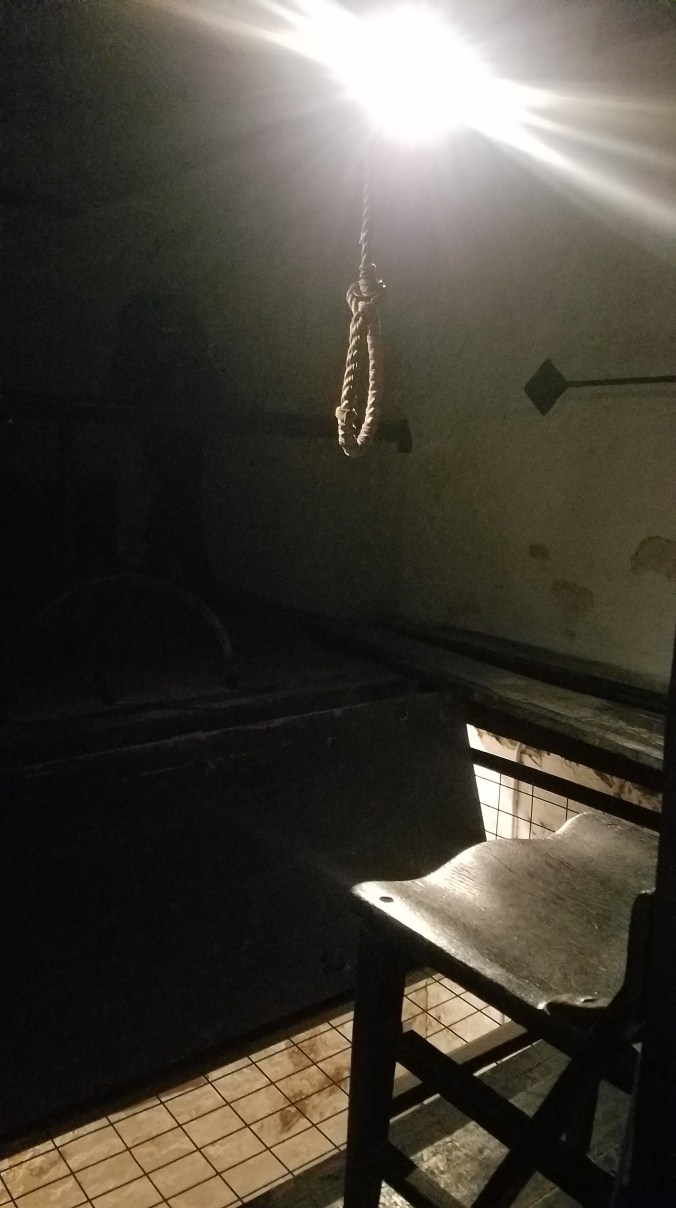
44 people were hanged at Fremantle Prison, the last in 1964. Only one woman was hanged, Martha Rendell. She was convicted of killing her 3 step-children, but there is much debate about whether she was guilty or not.
The next day I took the train back to Perth and checked back into Wickham Retreat. I drank with everyone at the hostel that night, then relaxed the next day before finishing the handful of beers I had left and going to bed. I had to wake up at 5:30 in the morning to go to the airport for my flight to Darwin.
 Kickin It With Kangaroos